


Why Your Propane Forklift Won’t Start: Troubleshooting Guide for Operators
July 1, 2026 6:23 pmIt is the start of a busy shift, and the warehouse floor is humming with activity. You climb into the driver’s seat, turn the key, and expect the familiar rumble of the engine. Instead, you get nothing but a sputtering crank or dead silence. A stalled forklift is more than just a minor annoyance; it halts your entire workflow, delays shipments, and costs your business money. In a busy industrial setting, understanding how to diagnose these issues quickly keeps operations moving safely and efficiently.
Propane forklifts are reliable workhorses, but they rely on a precise mix of fuel, air, and electrical power to run. When one of these elements is off, the machine simply will not cooperate. This guide walks you through the most common reasons your lift truck is refusing to start, focusing on practical checks an operator can perform right on the shop floor. By mastering these basic troubleshooting steps, you can fix simple issues yourself and know exactly when it is time to call in the professionals.
- Fuel Supply and Cylinder Issues
The absolute most common reason a lift truck fails to start is that it is simply out of gas, or the fuel cannot flow properly. Operators often overlook the physical state of the cylinder and its valves during a rushed pre-shift inspection.
- Empty Propane Tank: It sounds obvious, but a tank that feels heavy can still be empty of usable liquid fuel. Check the fuel gauge on the dashboard or physically inspect the tank’s frost line to see if you need to arrange a fresh propane delivery.
- Closed Service Valve: If the tank was recently changed, the coupler might be tight, but the handwheel valve could still be shut. Ensure you open the valve slowly and completely to allow the liquid fuel to pressurize the lines properly.
- Improper Tank Alignment: Propane tanks must sit precisely on the locating pin on the mounting bracket. If the tank is rotated incorrectly, the internal liquid dip tube will draw air instead of liquid, causing the engine to starve and sputter out.
- Faulty Quick-Disconnect Coupler: The brass fitting connecting the hose to the cylinder can wear down over time. If it is not tightened completely, the internal pin will not open, blocking the gas flow entirely even if the valve is wide open.
- Frozen Regulator or Vapourizer: When propane changes from a liquid to a gas, it drops in temperature rapidly. If your forklift has low engine coolant, the regulator can freeze over, blocking the gas path and leaving you searching for a reliable propane supplier in GTA to help inspect your fleet demands.
- Electrical System Failures
Even though these machines run on gas, they require a strong electrical charge to turn the engine over and ignite the fuel mixture. Cold Canadian winters can quickly drain a battery or expose weak wiring connections.
- Dead or Drained Battery: Leaving the ignition key or the headlights on after a shift will drain the battery overnight. Check if the dash lights turn on; if they are dim or flickering, the battery lacks the voltage to engage the starter motor.
- Corroded Battery Terminals: Corroded, loose, or dirty terminal clamps prevent the alternator from charging the battery and block power from reaching the starter. Clean any white, powdery buildup off the leads with a wire brush.
- Blown Fuses or Tripped Relays: The electrical path running from the ignition switch to the starter is protected by fuses. A sudden power surge can blow a fuse, cutting the electrical connection completely and leaving the truck entirely unresponsive.
- Faulty Starter Motor: If you hear a single, loud metallic click when turning the key, the starter solenoid or motor may be jammed. This requires a mechanic to repair, meaning your team will need a temporary workaround to keep operations running.
- Operator Errors and Safety Interlocks
Modern lift trucks are fitted with a network of safety switches designed to prevent the machine from starting in unsafe conditions. Many maintenance calls end up being simple cases of an unengaged safety feature.
- Gear Lever in Drive or Reverse: Forklifts will not start if the directional lever is engaged. The transmission must be locked in absolute neutral before the ignition switch will allow the engine to crank over.
- Unbuckled Seatbelt Switch: Many Canadian industrial sites require high-safety seatbelts that cut the ignition if they are not latched. Ensure the belt is pulled out fully and clicked firmly into the buckle receiver.
- Emergency Stop Button Depressed: The large red E-stop button is easily bumped by an operator scrambling into the cab or reaching for paperwork. Check that the button is pulled out or twisted into the “on” position before turning the key.
- Seat Interlock Sensor: There is a weight sensor hidden beneath the vinyl seat cushion that detects if a driver is present. If you are sitting too far forward or if the sensor wire is damaged, the engine will remain dead.
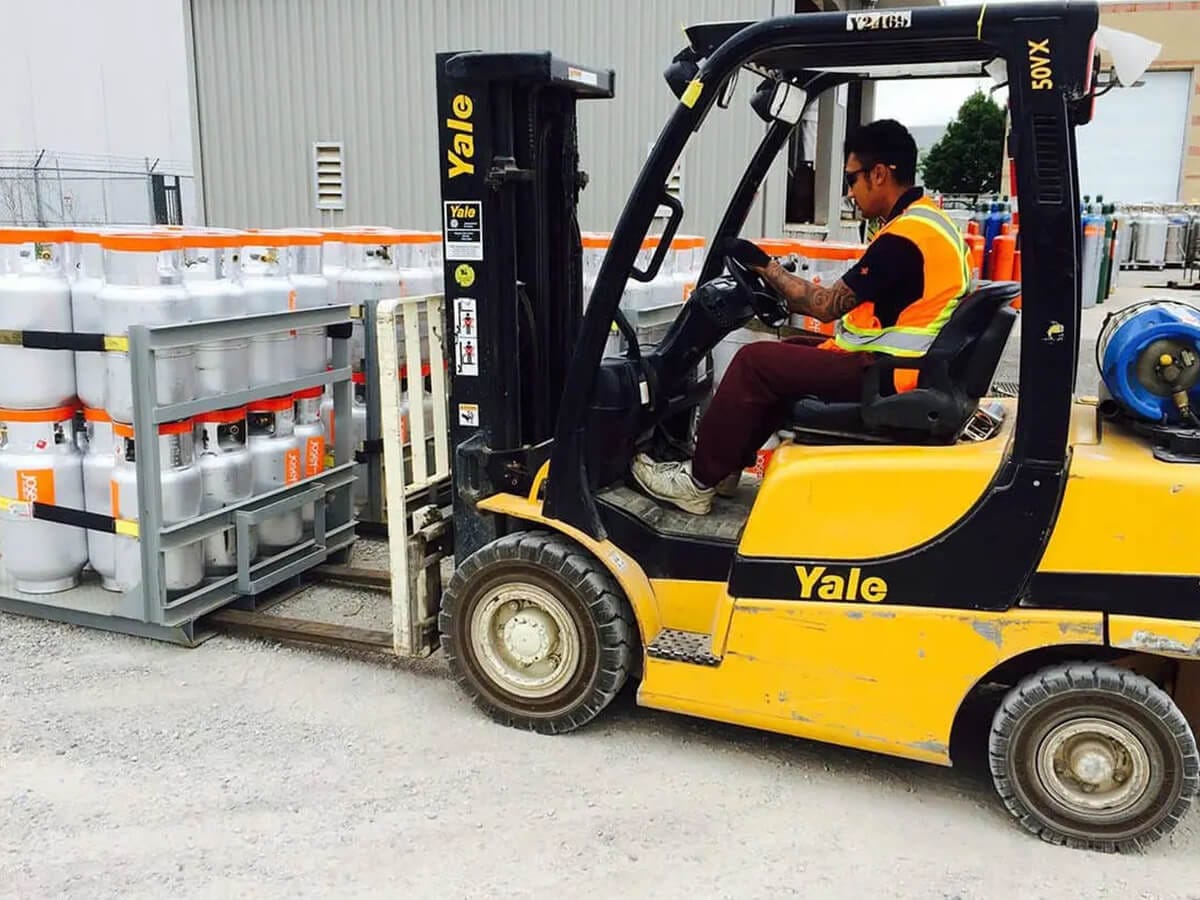
- Air Filtration and Ignition Problems
An engine needs to breathe just as much as it needs fuel. In dusty warehouse settings or recycling yards, airborne debris can choke the intake system in a matter of days.
- Clogged Air Filter: When the air filter element is caked with dust and grime, the engine cannot draw enough oxygen to create a combustible mix. Pull the filter canister out and tap it gently to see if it is choked with dirt.
- Fouled Spark Plugs: Over time, carbon deposits build up on the spark plug electrodes, preventing them from throwing a strong spark. This causes rough idling, hard starting, or a total failure to ignite the propane vapor.
- Damaged Distributor Cap or Wires: Cracked plug wires allow electrical current to short out against the engine block before reaching the cylinders. This is especially common in humid environments or damp morning shifts.
According to the Canadian Centre for Occupational Health and Safety (CCOHS), regular pre-shift inspections are not just good practice—they are a legal requirement under provincial safety regulations to prevent workplace injuries and mechanical failures.
- Fuel System Blockages and Component Wear
Propane is a clean-burning fuel, but heavy ends—a oily, tar-like residue—can accumulate inside the fuel system components over months of heavy operation.
- Gummed-Up Carburettor: As propane vapourizes, it can leave oily deposits behind in the carburettor jets. This sticky residue restricts fuel movement, causing the engine to lean out and stall immediately after cranking.
- Defective Fuel Lock-Off Valve: This safety valve opens only when the engine is cranking or running to prevent gas leaks. If the internal electric solenoid burns out, the valve stays shut, cutting off your gas supply entirely.
- Vacuum Leaks: Propane regulators rely on engine vacuum to release fuel. A cracked vacuum hose draws in outside air, disrupting the internal diaphragm and stopping fuel from traveling to the intake manifold.
If you are tired of dealing with old, poorly maintained cylinders that gum up your engines, it might be time to upgrade your fuel source. You can secure premium, clean-burning fuel by choosing a dependable propane supplier in GTA.
Safety First During Troubleshooting
Whenever you work around industrial machinery and pressurized gases, safety must be your top priority. Technical guidelines from the Technical Standards and Safety Authority (TSSA) emphasize that operators should never attempt to repair specialized fuel components themselves.
- Wear Proper PPE: Always wear thick leather gloves and safety glasses when handling fuel lines. Liquid propane flashes into gas instantly and can cause severe frostbite if it touches bare skin.
- Check for Leaks Safely: If you smell gas, do not use a match or lighter to find the leak. Spray a mixture of soapy water onto the fittings; if bubbles form, you have a leak that requires immediate attention.
- Park in a Safe Area: If the truck starts sputtering, steer it away from fire hazards, electrical panels, or main pedestrian walkways before shutting it down completely.
Dealing with unexpected downtime throws a wrench into your daily productivity goals. While basic operator checks like resetting an emergency stop button or shifting into neutral can fix the issue in seconds, sometimes the root cause is poor fuel quality or a lack of reliable tank supplies. If you find your team constantly wrestling with empty or malfunctioning tanks, finding high-quality propane for forklift near you will eliminate these unnecessary headaches and keep your drivers moving cargo safely.
In conclusion, maintaining an efficient fleet requires a mix of trained operators, proactive daily inspections, and a partnership with a dependable fuel partner. Ignoring minor starting issues usually leads to more expensive mechanical repairs down the road. If you want to streamline your material handling operations and eliminate fuel-related delays, contact Josef Gases at (416) 658-1212 for reliable propane delivery straight to your facility. Our team ensures your business always has the clean, dependable energy required to power through every shift without interruption.



