

Why “Laser Grade” Purity Matters for Your Lens Life
March 9, 2026 7:33 pmWhether you are running a CO2 laser or a fibre laser system, the quality of the beam determines the quality of the cut. However, there is a silent partner in this process that often goes overlooked until expensive damage occurs: the assist gas. While operators frequently obsess over focus focal lengths, nozzle centring, and cutting speeds, the purity of the gas flowing through the nozzle is equally critical.
“Laser grade” purity is not just a marketing term; it is a technical necessity for maintaining the longevity of your optical components. The difference between standard industrial-grade gas and high-purity laser gas can be measured in thousands of dollars of ruined lenses, lost production hours, and compromised cut quality.
Understanding the physics behind gas purity and its interaction with your laser’s optics is essential for any shop manager or operator looking to optimize efficiency and protect their equipment investment.
The Function of Assist Gases
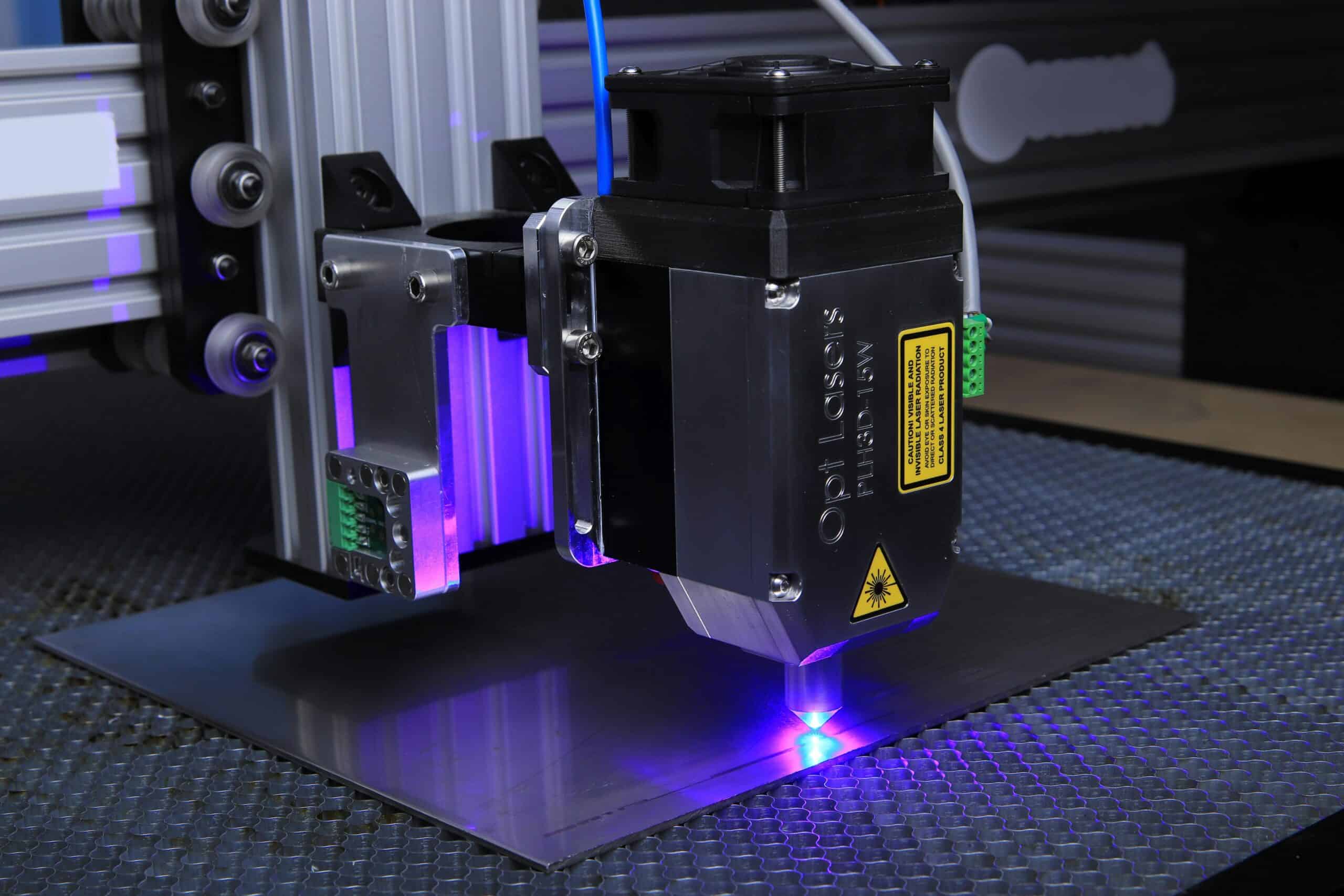
To understand why purity matters, we must first look at the role of the assist gas. In laser cutting, the gas serves three primary functions: it blows molten material (dross) away from the cut zone, it protects the focusing lens from splatter, and, in the case of reactive cutting (using oxygen), it adds exothermic energy to the process to speed up the cut.
The gas travels from the supply tank, through a pressure regulator and piping system, down through the cutting head, and finally out through the nozzle. Crucially, before it exits the nozzle, it occupies the space directly beneath the focusing lens. This means the laser beam must pass through a column of this gas before it hits the workpiece. If that gas contains contaminants, the beam’s path is obstructed, and the lens—the most vulnerable and expensive consumable in the optical path—is put at risk.
The Enemies: Hydrocarbons, Moisture, and Particulates
What exactly differentiates “laser grade” gas from standard welding or industrial gas? The answer lies in the removal of microscopic contaminants. Standard industrial gases, while sufficient for general welding or shielding, often contain trace amounts of moisture, hydrocarbons (oil), and particulates.
- Moisture: Water vapour is perhaps the most insidious enemy of laser optics. When moisture enters the beam path, it absorbs laser energy. This absorption causes the gas to heat up, creating a phenomenon known as “thermal blooming” or “thermal lensing.” This alters the refractive index of the gas, causing the beam to defocus before it even hits the material. More dangerously, moisture can condense on the surface of the cooling lens, creating “hot spots” where the laser energy is absorbed by the water rather than passing through the glass or zinc selenide (ZnSe) optic.
- Hydrocarbons: Minute traces of oil or grease can enter the gas stream from low-quality compressors or improper cylinder handling. When high-intensity laser light hits a hydrocarbon molecule on the lens surface, it burns instantly. This burning residue bakes onto the lens, creating a permanent black spot. This spot absorbs more laser energy, heating up rapidly and eventually causing the lens to crack or shatter due to thermal stress.
- Particulates: Dust, rust, or other solid particles in lower-grade gas act similarly to hydrocarbons. They settle on the optic, absorb energy, and create localized heating that destroys the coating and the substrate of the lens.
Thermal Lensing and Optical Distortion
The primary consequence of using low-purity gas is thermal lensing. In an ideal scenario, a laser lens transmits over 99% of the laser energy. However, if the assist gas introduces impurities that settle on the lens, the absorption rate increases. As the lens absorbs energy, it heats up.
Materials expand when heated. Even a microscopic expansion in the center of the lens changes its curvature. This change shifts the focal point of the laser during operation. An operator might set the perfect focus at the start of a shift, but as the lens heats up due to contaminants, the focus shifts upwards or downwards. This results in inconsistent cut quality, increased dross, and the need for constant parameter adjustments.
By using laser-grade gases (often purity levels of 5.0 or 99.999% and higher), you ensure that the medium between the lens and the workpiece is optically transparent. This stability allows the lens to remain at a consistent temperature, maintaining the focal point and ensuring consistent cutting performance from the first part of the day to the last.
The Economic Case for Purity
It is a common misconception that buying lower-grade gas saves money. While the upfront cost per cylinder or dewar might be lower, the Total Cost of Ownership (TCO) tells a different story.
High-quality laser lenses for modern fibre and CO2 systems can cost anywhere from hundreds to thousands of dollars. If using impure gas reduces a lens’s lifespan from 1,000 hours to 200 hours, the cost of replacement optics far outweighs the savings on gas. Furthermore, the cost of downtime must be factored in. Every time a lens cracks or needs cleaning due to contamination, the machine is not cutting. In a production environment, an hour of downtime can cost significantly more than the price difference between industrial and laser-grade gas.
Reliable sourcing is key here. You need a supplier who understands the nuances of different applications. For example, while you might have a trusted source for welding gas in Toronto and the GTA, it is vital to ensure they also carry specific laser-grade mixtures and pure gases that are handled with dedicated cylinders to prevent cross-contamination.
Specific Gases and Their Purity Requirements
Different laser processes require different gases, but the purity requirement remains constant across the board.
- Nitrogen: Used primarily for inert gas cutting (clean cutting) of stainless steel and aluminum, nitrogen prevents oxidation on the cut edge. If the nitrogen contains oxygen impurities, the edge will discolour. If it contains moisture, the lens life will suffer. High-purity liquid nitrogen is often the standard for high-production shops.
- Oxygen: Used for cutting mild steel, oxygen purity is critical for cut speed. A drop in oxygen purity by just 0.1% can reduce cutting speed by 10% or more. However, from a lens protection standpoint, the cleanliness of the oxygen supply (free from pipe scale and moisture) is what prevents catastrophic lens failure.
- CO2 Mixtures: For the laser resonator itself (in CO2 lasers), the lasing gas mix (Helium, Nitrogen, CO2) must be ultra-pure. Impurities here can contaminate the electrodes and discharge tubes, leading to expensive resonator repairs, not just lens replacements.
The Supply Chain Factor
Maintaining purity is not just about the gas manufacturing process; it is about the delivery system. High-purity gas put into a dirty cylinder becomes dirty gas. This is why specialized suppliers distinguish between their fleets. A cylinder used for standard industrial applications should not be rotated into a laser-grade fleet without rigorous cleaning and evacuation protocols.
This attention to detail is similar to other industries with strict compliance requirements. Just as regulations ensure the safety of food-grade gas in Toronto, the laser industry relies on suppliers who adhere to strict quality control measures. Using a supplier that treats laser gas with the same reverence as food-grade or medical-grade gas ensures that the product arriving at your dock matches the specifications required by your machine manufacturer.
Best Practices for Protecting Your Lens
Beyond buying the right gas, there are mechanical steps shops can take to ensure purity is maintained up to the nozzle:
- Filters: Install sub-micron filters in your gas delivery line immediately before the laser machine. These point-of-use filters act as a final goaltender, catching any particulates that may have entered the system during cylinder changes.
- Lines and Hoses: Use stainless steel tubing or high-quality hoses rated for high purity. Old rubber hoses can degrade over time, shedding particles into the gas stream.
- Purging: When changing cylinders, ensure the lines are properly purged to prevent atmospheric air (and humidity) from entering the system.
- Leak Checks: Regularly check for leaks. A leak doesn’t just let gas out; thanks to the Venturi effect, high-velocity gas flows can actually suck atmospheric air and moisture into the line if a leak exists.
A Holistic Approach to Shop Supply
Ultimately, the goal of any fabrication shop is seamless operation. Managing multiple vendors for different gas needs can be administratively burdensome and lead to inconsistent quality. The ideal scenario is partnering with a supplier who can service the entire spectrum of your facility’s needs.
A versatile supplier can streamline your logistics by delivering your ultra-high purity nitrogen for the laser, your shielding gases for the welding department, and even the propane in Toronto and the GTA required to keep your forklifts moving materials to and from the cutting table.
Consolidating your gas supply with a vendor who understands the specific “grades” required for each application—from the ruggedness of a forklift to the delicacy of a laser optic—ensures that you never accidentally hook up a dirty tank to a sensitive machine.
Source High-Purity Laser Gases for Your Applications
If you are looking to secure a reliable supply of high-purity laser gases, or need to consolidate your shop’s needs ranging from welding mixes to propane, Josef Gases is here to help. We understand the technical demands of modern fabrication and offer the consistent quality your machinery requires. Reach out to us at in**@********es.com or call 416 658-1212 to discuss how we can support your production goals.



