


The Toronto Welder’s Guide to Matching Shielding Gases with Premium Consumables
April 6, 2026 6:58 pmIn the busy shops of the Greater Toronto Area, the difference between a structural masterpiece and a pile of scrap metal often comes down to what you can’t see. While the welding machine and the torch get most of the credit, the invisible shield of gas and the melting electrode do the heavy lifting. Local fabricators know that the humid summers and freezing winters in Ontario can affect how equipment behaves, making the choice of materials even more critical. Getting the right match ensures that your beads are smooth, your penetration is deep, and your cleanup time is kept to a minimum.
Whether you are working on high-rise construction in the downtown core or doing custom automotive work in Etobicoke, your results depend on a stable arc. This stability is only possible when your shielding gas and your consumables—like wires, rods, and tips—work in total harmony. Using a high-quality gas mixture with a cheap, mismatched wire is like putting low-grade fuel in a performance engine; it might run, but it won’t run well. This guide breaks down how to pair these essential components to ensure your shop stays productive and your welds meet the highest Canadian standards.
The Foundation of Gas and Wire Compatibility
- Carbon Steel and 75/25 Argon Mix: This is the “bread and butter” for most shops using welding supplies in Toronto. A mixture of 75% Argon and 25% CO2 provides a great balance for MIG welding on mild steel. It offers less spatter than pure CO2 and better puddle control.
- ER70S-6 Wire Pairing: When using an Argon/ CO2 mix, the ER70S-6 is the go-to consumable. It contains higher levels of deoxidizers, which helps when welding over light mill scale or rust, common in outdoor Canadian environments.
- Pure Argon for TIG Welding: For those doing precision work on thin materials, pure Argon is a must. It provides the arc stability needed for intricate TIG beads.
- Aluminium and 4043/5356 Rods: Aluminium requires a 100% Argon shield. The choice between 4043 (easier to use, bright finish) and 5356 (stronger, better for anodising) depends on the specific project requirements and the structural needs of the build.
Advanced Mixtures for Stainless Steel
- The “Tri-Mix” Advantage: Stainless steel is sensitive to heat and oxidation. A mix of Helium, Argon, and CO2 is often used to keep the weld pool fluid while maintaining corrosion resistance.
- 308L and 316L Consumables: Matching the wire to the base metal is vital for stainless. 308L is standard for common food-grade projects, while 316L is used for marine or chemical environments where salt or acid might be present.
- Avoiding Carbon Contamination: Using a gas with too much CO2 on stainless steel can lead to “carbon pickup,” which ruins the metal’s ability to resist rust. Always stick to high-argon or tri-mixes for these premium metals.
- Gas Flow Rates: In Toronto’s drafty industrial bays, keeping a consistent flow rate (measured in Cubic Feet per Hour) is just as important as the gas type. Too much flow creates turbulence; too little allows atmospheric air to ruin the weld.
Industrial Logistics and Fuel Needs
- Powering the Job Site: Many mobile welding rigs and fabrication shops rely on more than just electricity. Reliable propane delivery is essential for pre-heating thick plates or running space heaters in the winter months.
- Forklift Efficiency: If your shop moves heavy steel beams or large gas pallets, you likely have a forklift on-site. Searching for propane for forklift near you ensures that your material handling never grinds to a halt during a big production run.
- Heat Treatment: Propane is also frequently used for “stress-relieving” welds or heating parts to prevent cracking in high-carbon steels. Having a steady supply of propane delivery keeps these secondary processes moving.
- Safety Standards: The Canadian Standards Association (CSA) W59 code provides strict rules on how steel structures should be welded. Following these guidelines means using verified gases and consumables that have been tested for impact strength and ductility.
Optimizing the Welding Environment
- Contact Tip Selection: The contact tip is the last point of contact for the welding wire. A worn tip causes “micro-arcing,” which leads to an unstable arc. Match the tip size exactly to your wire diameter for the best electrical conductivity.
- Nozzle Maintenance: Spatter buildup inside the gas nozzle blocks the flow of shielding gas. Use anti-spatter sprays or ceramic coatings to keep the gas path clear and ensure the shield remains intact.
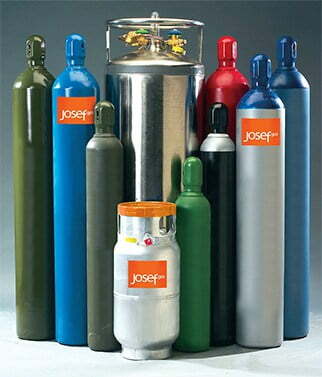
- Regulator Accuracy: A “creeping” regulator can waste gas or cause porosity. Check your gauges regularly. If you need a replacement or need to find professional welding supplies in Toronto, the team at Josef Gases at (416) 658-1212 can help you find the right flowmeter for your specific gas type.
- Liner Quality: The conduit liner inside your MIG gun must be kept clean. A clogged liner causes “bird-nesting” at the drive rolls, wasting expensive wire and causing downtime.
Compliance and Quality Control in Canada
- CWB Certification: The Canadian Welding Bureau (CWB) oversees the certification of companies and welders. Using approved consumables ensures that your work passes inspection for infrastructure projects across Ontario.
- Material Traceability: High-end projects often require “mill test reports” (MTRs) for both the wire and the gas. Keeping records of where you buy your supplies helps you prove the quality of your work to clients and inspectors.
- Industry Stats: According to recent industry data, poor gas coverage and incorrect consumable storage (like letting sticks get damp) account for nearly 20% of all weld failures in industrial settings.
- Storage Best Practices: Keep your electrodes in a dry oven. Low-hydrogen rods like 7018 can pick up moisture from the Toronto air, leading to “underbead cracking” in heavy structural joints.
Managing Costs Without Cutting Corners
- Bulk Gas Savings: For high-volume shops, moving from individual cylinders to bulk liquid tanks can significantly lower the cost per weld. This is especially true for Argon and CO2 mixtures.
- Reducing Wire Waste: Buying larger spools reduces the amount of wire left at the end of a roll and cuts down on the time spent swapping consumables.
- Propane Management: Don’t let your machinery sit idle while you look for propane for forklift near you; setting up a scheduled swap program ensures you always have fuel ready for the next shift.
- Long-term Durability: Using premium consumables might cost more upfront, but they reduce the time spent grinding, re-welding, and repairing defects, which saves much more money in the long run.
Essential Safety Gear and Site Logistics
- Fume Extraction: Different gas mixes and wires produce different types of fumes. Manganese in certain wires is a health concern, so proper ventilation or respiratory protection is a legal requirement under Ontario health and safety laws.
- Flash Protection: High-argon mixes produce a very bright arc. Ensure your auto-darkening helmet is rated for the specific amperage and process you are using to prevent “arc eye.”
- Cylinder Handling: Always secure gas cylinders with chains. A fallen high-pressure tank can become a dangerous projectile. When arranging for propane delivery, ensure your drop-off point is clear of debris and easily accessible for the truck.
- Workplace Inspection: Check your leads and hoses for leaks. A small leak in a gas hose can suck in air, causing porosity that looks like a bad gas mix but is actually just a mechanical fault.
![For a dependable partnership that delivers both high-quality food-grade gas in Toronto and flawless propane delivery, there is only one number to call. Contact Josef Gases at (416) 658-1212 now to schedule your consultation.]](https://josefgases.com/wp-content/uploads/2025/11/CTA-image-1.jpg)
Selecting the right combination of gas and metal is the hallmark of a professional. In a city like Toronto, where the construction industry moves fast and the quality standards are high, you cannot afford to guess. By sticking to proven pairings—like Argon/CO2 with ER70S-6 or pure Argon with stainless-grade rods—you ensure that every joint you fuse is as strong as the steel it holds together. This attention to detail reduces waste, keeps your tools in good shape, and ensures your shop stays profitable.
Behind every great weld is a reliable supply chain. Whether you are running a fleet of lifts and need propane for forklift near you or you are looking for the best welding supplies in Toronto, having a local partner makes all the difference. Quality gases and consumables are the foundation of your craft. For expert advice on gas mixtures or to schedule your next propane delivery, call Josef Gases at (416) 658-1212 and get the materials you need to finish the job right.



