

The Hidden Danger: Carbon Monoxide Safety with Indoor Forklifts
December 22, 2025 7:02 pmWhile industrial accidents involving collisions or falling loads often dominate safety briefings, carbon monoxide poisoning remains a more insidious threat.
It is colourless, odourless, and tasteless, earning it the moniker “the silent killer.” When IC forklifts are operated indoors without adequate precautions, CO levels can rise to dangerous concentrations in a matter of minutes, posing severe health risks to operators and warehouse staff alike.
Let’s explore the dynamics of carbon monoxide generation in indoor forklifts, the health risks involved, and the rigorous safety protocols required to maintain a healthy work environment.
What Is Carbon Monoxide?
To combat the danger, one must first understand the enemy. Carbon monoxide is a byproduct of incomplete combustion. Ideally, when an engine burns fuel, it produces carbon dioxide (CO2) and water vapour.
However, engines are rarely 100% efficient. When there is insufficient oxygen during the combustion process, the fuel does not burn completely, resulting in the emission of CO.
The danger of CO lies in its chemical ability to displace oxygen in the bloodstream. When inhaled, CO binds to hemoglobin—the part of red blood cells that carries oxygen—with an affinity over 200 times greater than oxygen itself.
Essentially, it hijacks the blood’s transportation system, starving vital organs like the brain and heart of the oxygen they need to function.
The Spectrum of Symptoms
Because CO is undetectable by human senses, workers often do not realize they are being poisoned until they become physically ill. The severity of symptoms depends on the concentration of the gas (measured in parts per million, or ppm) and the duration of exposure.
- Low to moderate exposure: Often mimics the flu (without a fever). Symptoms include mild headaches, fatigue, shortness of breath, and nausea.
- High exposure: Can lead to severe headaches, dizziness, mental confusion, vomiting, and impaired coordination.
- Extreme exposure: Results in loss of consciousness, permanent brain damage, and ultimately, death.
In a warehouse setting, even mild symptoms are dangerous. A dizzy or confused forklift operator is a massive safety liability, increasing the risk of mechanical accidents alongside the toxicological threat.
The Indoor Forklift Dilemma
Electric forklifts are gaining popularity, but Internal Combustion lift trucks remain essential for many businesses due to their power, lower upfront cost, and ability to work in varied conditions. Propane-powered forklifts, in particular, are the industry standard for indoor/outdoor versatility.
However, operating an IC engine indoors creates a closed-loop problem. The exhaust emitted by the truck accumulates within the facility.
In the summer, open bay doors and fans might mitigate this naturally. The real danger spikes during the colder months. When temperatures drop, facility managers close doors and windows to conserve heat. In these sealed environments, a single poorly tuned forklift can elevate CO levels to hazardous thresholds surprisingly quickly.
The “Cold Start” Effect
The risk is often highest at the start of a shift. Cold engines tend to run “rich” (using more fuel relative to air) until they reach operating temperature. This rich mixture results in higher CO emissions. If multiple operators start their shifts simultaneously in a poorly ventilated loading dock, the air quality can deteriorate rapidly.
How-To’s of Prevention: Tuning and Maintenance
The first line of defence against CO poisoning is the mechanical integrity of the forklift itself. A well-maintained propane forklift should produce relatively low levels of carbon monoxide. However, as components wear and settings drift, emissions can skyrocket.
The Importance of the Air-to-Fuel Ratio
The critical factor in CO production is the air-to-fuel ratio. If the mixture contains too much fuel and not enough air, combustion remains incomplete, and CO is poured out of the tailpipe. Regular maintenance must include emissions testing using a gas analyzer. Mechanics should adjust the carburetor or fuel injection system to ensure the engine is running within the optimal lambda range.
For businesses operating in Ontario, adhering to strict provincial safety standards is mandatory. Sourcing high-quality parts and reliable maintenance services is a key aspect of compliance. This is particularly relevant when sourcing our propane for forklifts in Toronto, where local regulations regarding emissions and indoor air quality are rigorously enforced.
Using a provider that understands the specific needs of the Toronto market ensures that your equipment is fueled by a product that supports cleaner combustion.
Catalytic Converters
Modern IC forklifts are generally equipped with three-way catalytic converters. These devices scrub the exhaust, converting CO and unburnt hydrocarbons into less harmful carbon dioxide and water.
However, catalytic converters are not maintenance-free. They can become clogged or “poisoned” by additives in poor-quality oil or fuel. A failing converter can cause a forklift that looks and sounds normal to emit lethal levels of gas.
Ventilation and Monitoring Strategies
Even with perfectly tuned engines, some CO emission is inevitable with IC trucks. Therefore, engineering controls—specifically ventilation—are critical.
General Dilution Ventilation
Because forklifts are mobile sources of emissions, you cannot use “source capture” ventilation (like a hose attached to a tailpipe). Instead, facilities must rely on general dilution ventilation. This involves bringing in enough fresh outdoor air to dilute the contaminants to safe levels.
- Mechanical ventilation: Roof fans and exhaust systems that actively pull bad air out and push fresh air in.
- Air exchange rates: Facilities must calculate the required air exchange rate based on the volume of the warehouse, the number of forklifts operating, and their horsepower.
Continuous Monitoring
Guesswork is not a safety strategy. every facility using indoor IC forklifts should install hard-wired CO detectors.
- Placement: Detectors should be placed in the “breathing zone” (about 5 feet off the ground) and in areas where exhaust is likely to accumulate, such as corners or areas with low airflow.
- Personal monitors: For high-risk environments, operators can wear clip-on CO monitors that vibrate and sound an alarm if they enter a pocket of high gas concentration.
The Role of Fuel Quality and Supply
While mechanical tuning and ventilation are internal factors, the fuel you put into your forklifts acts as a critical external variable. Not all propane is treated equally, and the quality of the fuel can influence the cleanliness of the burn.
Impurities in the fuel system can lead to injector clogging or carburetor deposits, which disrupts the air-to-fuel ratio and increase emissions over time. This is why partnering with a reputable vendor is a safety decision, not a question of price.
Josef Gases, your dedicated propane supplier in the GTA, understands the chemical requirements for industrial-grade propane. We ensure that the fuel provided is free of heavy ends and contaminants that contribute to engine fouling.
Tank Safety and Integrity
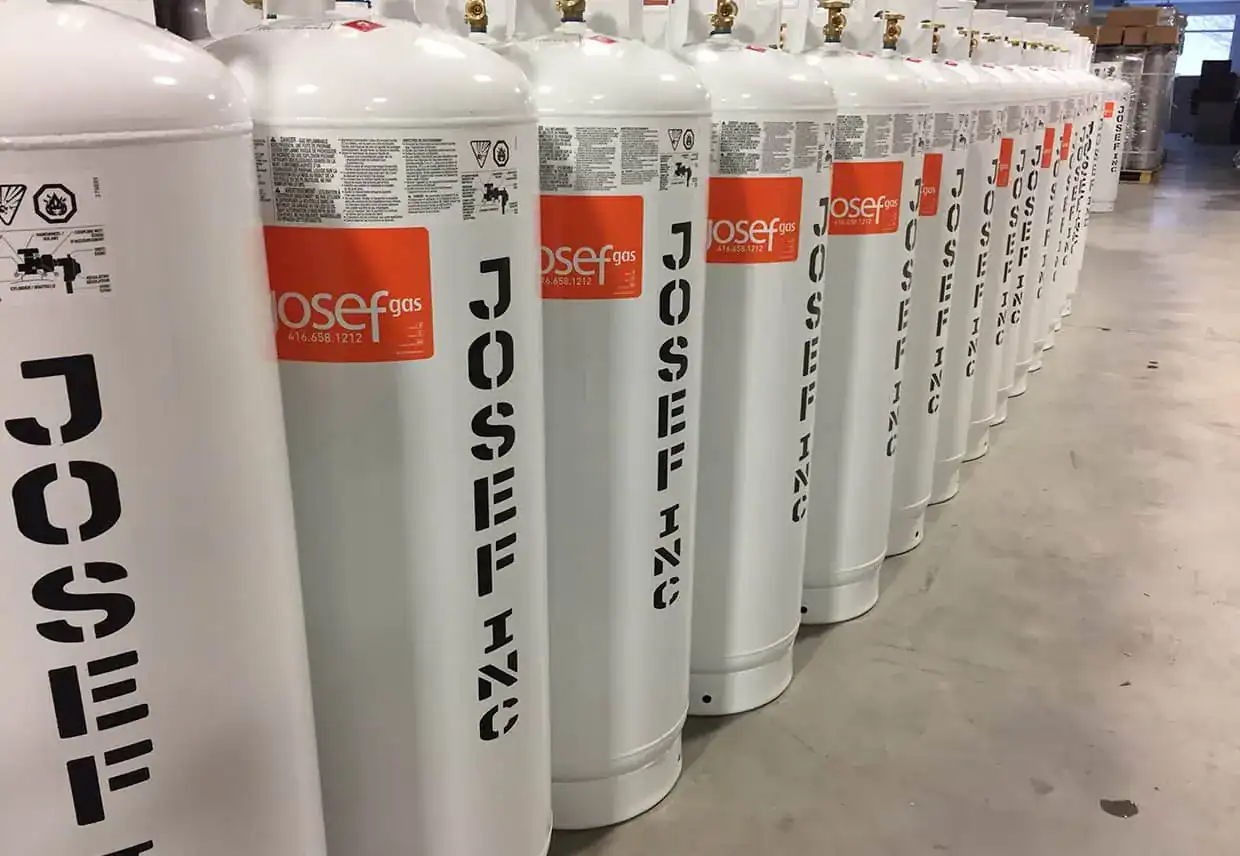
The danger isn’t limited to what comes out of the tailpipe. It also involves the fuel storage itself. Leaking valves or damaged cylinders can release propane into the workspace, creating both a toxicity and an explosion hazard.
A professional service that manages propane delivery will typically inspect cylinders upon exchange. This “cylinder swap” model is generally safer for warehouses than on-site refilling, as it removes the risks associated with dispensing liquid propane indoors or near the building.
Professional delivery services ensure that cylinders with worn O-rings, dented collars, or expired certification dates are taken out of circulation and repaired, adding a layer of safety that internal staff might overlook.
Administrative Controls and Training
Finally, the human element cannot be ignored. Safety technology is only as effective as the people using it. Comprehensive training programs are essential for mitigating CO risks.
Operator Protocols
Drivers should be trained on specific behaviours that reduce exposure:
- No idling: If the forklift is stationary for more than 10 seconds, the engine should be turned off. This is the single most effective way to reduce unnecessary emissions.
- Avoid “pockets”: Operators should be aware of dead zones in the warehouse where airflow is poor (e.g., inside truck trailers or shipping containers) and minimize time spent there.
- Reporting issues: Drivers are often the first to notice if an engine is running rough, smelling “rich,” or producing visible smoke. They must feel empowered to “red tag” a machine and take it out of service without fear of reprisal.
Emergency Response
What happens when the CO alarm goes off? A clear, rehearsed plan is vital.
- Evacuation: Immediate evacuation of all personnel to fresh air.
- Ventilation: If safe to do so, open all bay doors and engage emergency fans.
- Medical attention: Anyone exhibiting symptoms should seek medical evaluation immediately. CO leaves the blood slowly; oxygen therapy may be required.
- Investigation: Work should not resume until the source of the CO has been identified and fixed.
A Practical Approach to Safety
The convenience and power of indoor forklifts come with a responsibility to manage their environmental impact within the workplace. Carbon monoxide is a formidable hazard because it is invisible, but it is not unstoppable.
With rigorous engine maintenance, strategic ventilation, continuous atmospheric monitoring, and high-quality fuel sourcing, warehouse managers can neutralize the threat.
It requires a culture of safety where every team member—from the procurement officer choosing a propane vendor to the operator turning the key—understands their role in keeping the air clean.
Don’t wait for a headache or a triggered alarm to address air quality. Proactive maintenance and partnership with reliable suppliers are the keys to a safe, productive, and healthy warehouse.
Take the Next Step in Safety
Ensure your fleet is powered by the best. For reliable supply, tank inspection, and premium fuel quality, trust the experts at Josef Gases.
Contact Josef Gases today at 416 658-1212.



