


How Often Should You Replace Forklift Propane Cylinders?
August 4, 2026 6:33 pm
Propane-powered forklifts keep supply chains moving across warehouses, manufacturing plants, and distribution centres every single day. Knowing precisely when to inspect, requalify, or permanently retire your gas cylinders prevents costly downtime and keeps your workplace safe. Forklift propane tanks do not come with a single fixed expiry date for everyday usage, but Canadian safety codes dictate mandatory ten-year requalification cycles alongside strict daily visual inspection standards. Understanding these replacement intervals ensures your fleet runs smoothly while staying fully compliant with industrial safety regulations.
Operating heavy machinery safely requires careful monitoring of fuel containers and connection hardware. Physical damage, hidden corrosion, worn valves, or expired inspection stamps all signal that a tank must immediately come out of service. Facilities across Ontario must balance routine tank swaps with scheduled regulatory inspections to avoid operational halts. Whether managing a busy freight dock or a processing plant requiring food-grade gas in Toronto, keeping fresh, fully inspected fuel supplies on hand is essential for daily efficiency.
Key Signs Your Forklift Cylinder Needs Immediate Replacement
- Noticeable rust or severe surface pitting
Metal degradation weakens the outer walls of pressure vessels over time. Deep rust pockets, flaking paint, or corrosion spots near weld seams compromise structural strength. Any tank displaying heavy oxidation should be taken out of rotation immediately and evaluated by a qualified inspector before further use.
- Visible dents, gouges, or structural deformities
Accidental impacts from warehouse collisions or improper storage cause physical dents on the tank shell. Gouges deeper than the protective coating reduce wall thickness, creating dangerous stress points. If a tank suffers any blunt impact damage during daily operation, replace it without waiting for scheduled inspection dates.
- Damaged valves, collar guards, or leaking fittings
The top valve assembly controls high-pressure fuel release to your engine line. Damaged threads, bent valve stems, or broken protective collars prevent secure connections and allow dangerous fuel leaks. Swap out any tank displaying cracked handwheels, worn rubber seals, or faulty pressure relief fittings right away.
- Expired manufacture or requalification date stamps
Every container carries stamped markings on its top collar showing the original manufacture date or subsequent test records. In Canada, containers must undergo professional testing every ten years. Operating a forklift with an overdue cylinder violates workplace safety standards and creates avoidable fire hazards in your building.
- Persistent smell of propane gas near the unit
Propane manufacturers add an odorant called ethyl mercaptan to help workers detect leaks quickly. If you smell rotten cabbage or eggs near your stored fuel units, shut off the main valve immediately. Isolate the affected tank outdoors and replace it with a certified container from Josef Gases.
- Fire exposure or extreme thermal heat stress
High temperatures weaken aluminium and steel pressure vessels, altering the structural integrity of the metal. Any container exposed to direct fire or severe overheating must be permanently retired from service. Never attempt to refill or reuse a heat-damaged container under any operational circumstances in your plant.
Requalification and lifespan rules set by Canadian authorities
- 10-year mandatory requalification intervals
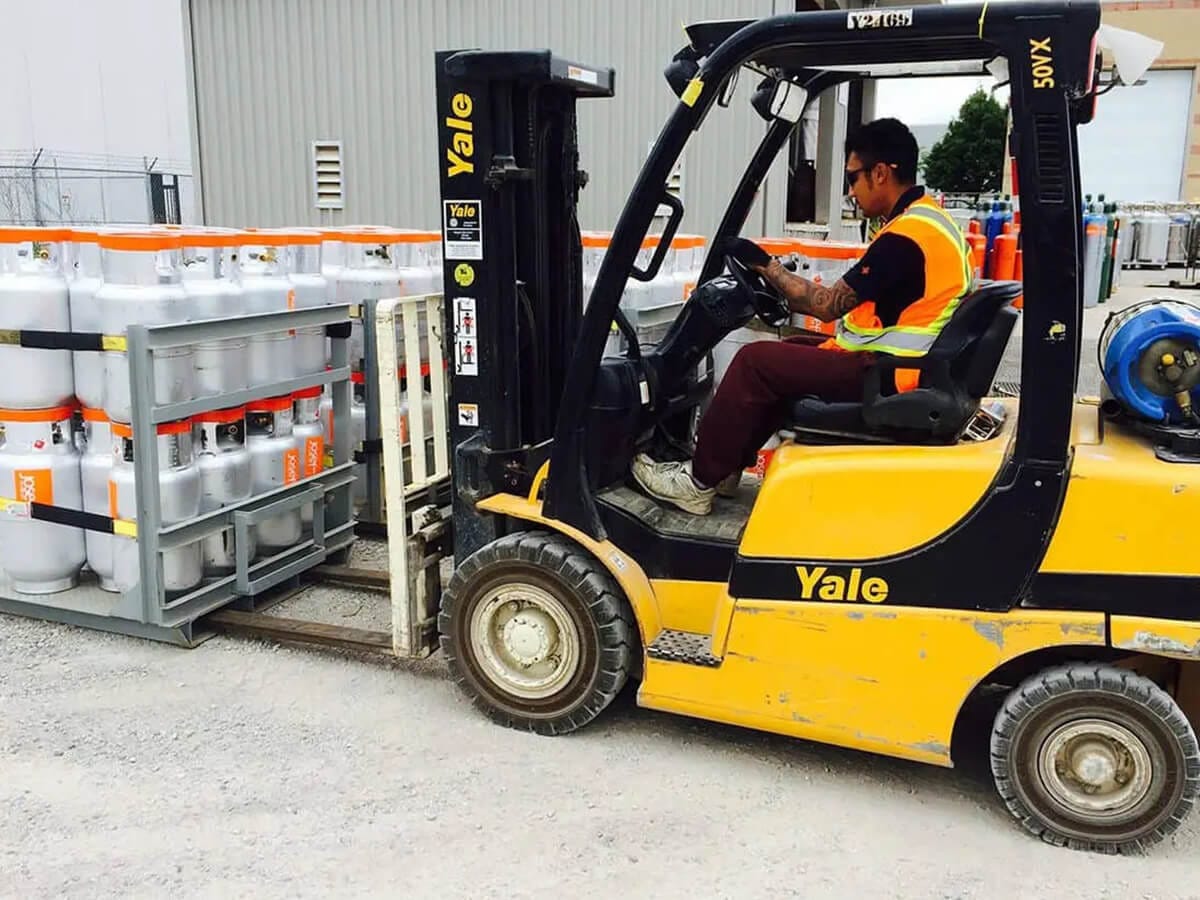
According to guidelines from Canadian Propane Association, propane pressure vessels must undergo formal inspection every 10 years from their original manufacturing date. Certified technicians perform volumetric expansion or visual testing to verify structural strength. Passing containers receive a new stamped date, granting approval for another full operating cycle.
- Daily pre-shift inspections required by safety standards
According to safety recommendations from the Canadian Centre for Occupational Health and Safety, operators must inspect fuel containers before starting every shift. Drivers check for secure mounting, leak-free hose connections, and clear relief valve vents. Catching small defects during pre-shift checks prevents major operational hazards later.
- Strict rules governing damaged thread connections
According to regulations outlined in the CSA B149.2 Propane Storage and Handling Code, valve threads must remain free of dirt and physical damage. Stripped or cross-threaded outlets prevent gas-tight connections with machine fuel lines. Faulty valves require immediate replacement by a licensed cylinder servicing company in your area.
- Mandatory retirement for uncertified pressure vessels
Containers that fail requalification tests or show irreparable structural damage must be scrapped according to national safety protocols. Requalification facilities permanently deform or puncture failed tanks so they cannot re-enter circulation. Sourcing verified, fully tested forklift propane in Toronto guarantees your containers meet all current safety codes.
- Proper storage rules for spare fuel units
According to Ontario fire code regulations, full and empty fuel containers must be stored outdoors in secure, ventilated steel cages. Tanks must sit horizontally or vertically according to design specifications, kept far away from open flames, electrical panels, or busy traffic aisles where vehicle strikes might occur.
- Professional filling standards for commercial operations
Commercial fuel containers must only be filled by certified personnel who hold valid propane handling cards. Overfilling pressure vessels reduces the internal expansion space needed during hot summer months. Working with reliable suppliers ensures your containers receive precise fill levels alongside standard structural safety checks.
For reliable fuel delivery, certified tank inspections, and high-quality welding supplies and equipment, contact the expert team at Josef Gases today by calling (416) 658-1212 to discuss your industrial fuel requirements.
Maintenance Tips for Forklifts and Associated Shop Equipment
- Inspect fuel lines and rubber hoses monthly
Flexible fuel hoses supply propane from the container directly to the engine carburettor system. Over time, heat and vibration cause rubber lines to crack, stiffen, or rub against metal engine components. Replace worn fuel lines promptly to maintain reliable engine performance and prevent sudden fuel leaks.
- Maintain engine ignition and electrical systems
Faulty spark plugs or loose wiring cause backfiring, which puts sudden pressure on fuel intake valves and hoses. Keep engine electrical systems properly tuned so fuel burns cleanly without unburnt vapor buildup. Smooth ignition performance extends the operating life of your machine’s entire fuel delivery network.
- Calibrate food-grade gas in Toronto processing areas
Facilities operating specialized material handling machinery near clean production spaces must maintain strict contamination controls. If your site processes packaged goods or uses food-grade gas in Toronto, ensure your propane forklifts run cleanly without oil leaks, excessive exhaust soot, or fuel vapor emissions near products.
- Service fuel strainers and vaporizers regularly
Propane vaporizers convert liquid fuel into gas using heat from engine coolant lines. Heavy tar residues build up inside vaporizers over time, restricting fuel flow and reducing engine power. Routine filter cleaning prevents engine stalling and keeps fuel pressure steady throughout demanding work shifts.
- Maintain torch gear alongside material handling tools
Facilities using fuel gas for material handling often rely on cutting torches, regulators, and welding supplies and equipment for plant maintenance. Check pressure regulators, torch tips, and supply hoses on a weekly schedule. Sourcing high-grade maintenance supplies keeps both your forklifts and shop repair tools running safely.
- Partner with certified industrial fuel distributors
Working with an established fuel partner simplifies cylinder compliance, scheduled deliveries, and emergency replacements. Experienced suppliers handle all ten-year recertifications, valve replacements, and safety checks before tanks reach your facility. Sourcing dependable forklift propane in Toronto ensures your fleet operates cleanly without costly maintenance delays.
Managing your fuel inventory becomes straightforward when you partner with a trusted local supplier who understands industrial safety demands. Beyond supplying reliable pressure vessels and clean fuel, a complete industrial gas partner provides essential shop tools, torch components, and high-performance metalworking gear for your maintenance team. Keeping your facility well-stocked with reliable gas cylinders keeps your material handling equipment moving without interruption.
Whether your warehouse needs ongoing deliveries of forklift propane in Toronto, specialized industrial supplies, or food-grade gas in Toronto, Josef Gases provides fast delivery and expert service. Call Josef Gases today at (416) 658-1212 to speak with our specialists and order your industrial gases, tanks, and welding supplies and equipment.



