

Black Ice and Heavy Loads: Winter Safety Protocols for Propane Forklifts in Toronto
December 8, 2025 6:57 pmOperating forklift propane in Toronto during the winter months presents unique and substantial challenges, particularly when dealing with black ice and the demands of moving heavy loads. The city’s cold climate, often bringing sudden freezes and snowfalls, drastically alters the safety requirements for material handling operations. When an operator is manoeuvring a multi-ton machine with a massive load, the margin for error shrinks to near zero. Surfaces that appear merely wet can be deceptively slick, leading to loss of traction and control. Here are some of the essential, proven safety protocols designed to mitigate these extreme risks, ensuring your staff, equipment, and inventory remain protected throughout the winter season. These rules move beyond basic checks, focusing specifically on the high-risk combination of low-visibility surfaces and high-capacity lifting.
Protocols for Safe Winter Operation
The following protocols are vital for keeping propane forklifts running safely and efficiently while handling heavy cargo on slippery, ice-covered ground.
Pre-Operation and Equipment Checks
- Tyre Inspection and Conditioning: Before any shift, thoroughly check the tyre pressure and condition. On slippery surfaces, solid, non-pneumatic tyres common on forklifts offer less grip than air-filled ones. Consider winter-grade tyres or tyre chains designed for industrial vehicles, as their deep treads significantly improve traction on ice and snow. Worn treads must be replaced immediately, as they are completely ineffective on slick surfaces.
- Fuel System Integrity: Ensure the propane cylinder and all hoses are free from damage or leaks. Cold temperatures can make seals and hoses brittle. Check the propane tank for frost buildup, which can indicate an internal issue, though a small amount of frost is normal. Always handle tanks with gloves to prevent skin contact with cold metal. For reliable forklift propane in Toronto delivery and cylinder checks, call a trusted local supplier.
- Hydraulic and Fluid Check: Check hydraulic fluid levels. Cold weather increases the fluid’s viscosity, making the machine less responsive. Allow the forklift to run for a short period to warm the fluids, improving steering and lifting functions before attempting to carry a load.
- Lights and Visibility: Ensure all working lights, warning beacons, and reverse lights are completely clean and operational. Short daylight hours and frequent snow squalls mean operating often occurs in low-light conditions. Wipers and fluid levels must also be checked, as de-icing fluid is essential for maintaining clear sightlines.
- Battery Power: Even though the machine runs on propane, the battery powers all safety systems and starting. Cold saps battery strength. Check the battery’s charge and ensure terminals are clean and free of corrosion.
Site and Surface Management
- Black Ice Recognition: Operators must be trained to identify black ice, which looks like a wet patch but is extremely slippery. Instruct operators to avoid any surface that appears to have this clear, glassy sheen. Never assume a dark patch is simply wet concrete.
- De-Icing Procedures: Establish clear protocols for spreading salt or grit on all operational routes, especially near loading docks, ramps, and high-traffic corners. This must be an ongoing process, not a one-time task. Using a magnesium chloride-based de-icer can be more effective than standard rock salt in extreme cold.
- Snow Removal Standards: Ensure designated forklift routes are ploughed and cleared immediately after snowfall. The removal should expose the ground, not just compact the snow. Even a few centimetres of packed snow significantly reduce control.
- Ramp Safety: Ramps, both indoors and outdoors, are extreme hazard zones when icy. Use a spotter to guide the forklift and instruct operators to take ramps at an absolute minimum speed. The risk of sliding backward with a heavy load on a ramp is one of the highest winter dangers.
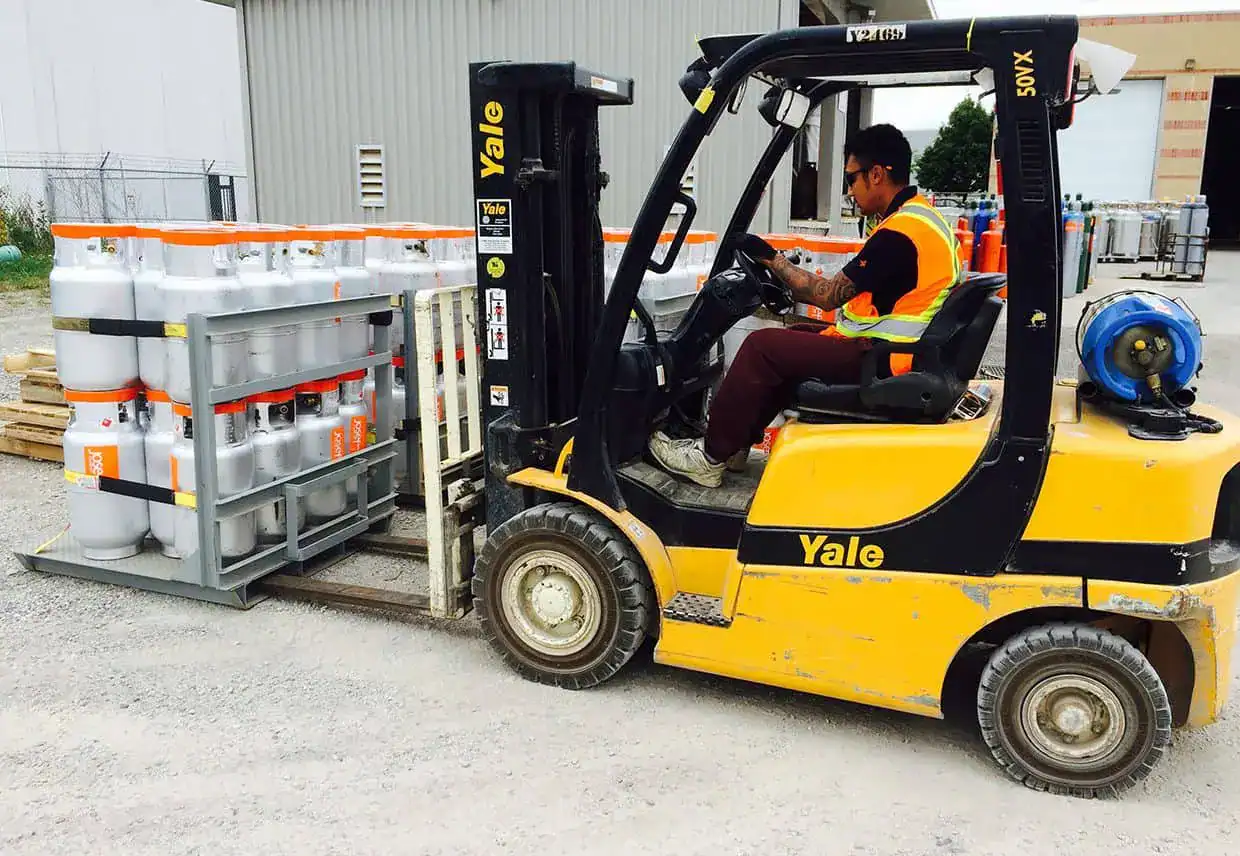
Operating Techniques with Heavy Loads
- Load Stability and Height: When the ground is slick, a high centre of gravity becomes catastrophic. Heavy loads must be carried as low as safely possible—ideally 10 to 15 centimetres off the ground—to maintain stability. Never tilt the load excessively forward or backward while moving.
- Reduced Speeds: The single most effective countermeasure for black ice is drastically reducing travel speed. On slick surfaces, a forklift’s stopping distance can double or even triple. Operators must drive slowly enough that they could safely stop within the distance of their clear line of sight.
- Smooth Movements: All movements—steering, braking, and raising/lowering forks—must be slow and gradual. Sudden acceleration or braking can easily lead to a skid or jackknife, particularly when turning with a heavy load. Use the machine’s “inching” pedal gently to manage speed on very slippery patches.
- Braking Technique: On ice, operators should pump the brakes lightly rather than slamming them on. In modern forklifts with advanced braking systems, gently apply pressure and allow the system to work. If a skid begins, steer into the skid (the direction the rear of the machine is sliding) while lifting the accelerator.
- Counterweight Awareness: The counterweight at the rear of the forklift is key to stability, but in a skid, it can initiate a dangerous rotational movement. Operators should always be aware of the rear swing and maintain a clear zone.
Operator Training and Personal Safety
- Dedicated Winter Training: Conduct mandatory, annual training sessions that specifically simulate skid and recovery scenarios and emphasize the difference in stopping distances on ice versus dry pavement. This training should be specific to the propane forklift model used.
- Warmth and Alertness: Provide operators with proper thermal clothing. Cold operators are distracted operators. Maintaining a warm cab (if available) or providing frequent warm-up breaks is crucial for alertness and responsiveness.
- Fatigue Management: Long hours in cold, high-stress conditions increase fatigue. Ensure shifts are managed to prevent driver exhaustion, as compromised reaction time on black ice with a heavy load is exceptionally dangerous.
Maintenance and Supplies
- Emergency Kit: Each forklift should be equipped with a winter emergency kit, including a small bag of sand or salt, a tow chain, high-visibility vest, and a charged cell phone.
- Gas and Heating Supplies: Maintain a stock of emergency heating supplies. If you operate other equipment or heat your warehouse, you’ll need reliable supplies. Josef Gases also provides high-quality welding gas in Markham and surrounding areas, which is often essential for cold-weather equipment repairs.
- Post-Shift Inspection: After a shift, especially one in wet conditions, a detailed walk-around is necessary. Check for ice buildup on mechanical parts, which can freeze controls overnight. Park forklifts in a warm, dry area if possible.
Safe material handling often depends on fast, reliable repairs. If you need new parts, supplies, or guidance on maintaining your industrial equipment, Josef Gases is your trusted local source. We not only supply gas but also a wide array of welding equipment in Toronto and beyond. Speak to our specialists at (416) 658-1212 for all your industrial supply needs.
The successful, accident-free operation of propane forklifts in Toronto during winter hinges entirely on proactive preparation and conservative driving techniques. The twin dangers of black ice and heavy loads demand a heightened level of respect and adherence to these stringent safety protocols. By investing in proper equipment—like tyre chains and de-icing materials—and consistently enforcing slow, controlled movements, businesses can drastically minimize risk. Safety should never be treated as a checklist item; it is a fundamental operating procedure that is reinforced with every shift. Protecting your employees and assets this winter is paramount, and it requires vigilance and the very best resources.
For all your winter fuel needs and industrial supply concerns—from dependable forklift propane in Toronto to the finest welding gas in Markham—rely on the local expertise of Josef Gases. Call us now at (416) 658-1212 to discuss your complete winter safety and supply plan.



