

How Long Does a 100L Propane Cylinder Last on a Commercial Roofing Job?
March 9, 2026 7:53 pmA single 100lb cylinder is the lifeblood of a commercial roofing site, and for those managing propane in Mississauga supply chains, understanding the exact burn rate of these tanks is the difference between a profitable shift and a total work stoppage.
Every minute a torch sits cold because a tank ran dry prematurely, labour costs mount without a single square metre of membrane being laid. Estimating fuel longevity requires a technical understanding of torch BTU output, ambient temperature variables, and the specific application methods used on the roof.
Calculating Burn Rates for 100lb Cylinders
A standard 100lb propane cylinder contains approximately 86 litres of liquid fuel when filled to the legal 80% safety limit. To determine how long this fuel lasts, we must look at the British Thermal Unit (BTU) rating of the roofing equipment. A typical heavy-duty roofing torch consumes between 100,000 and 500,000 BTUs per hour depending on the flame setting.
Consumption Benchmarks
- Detail Torches: Smaller torches used for flashing and corners consume roughly 1.5 to 2.5 kg of propane per hour, giving a 100lb tank a lifespan of 18 to 24 hours of continuous trigger time.
- Field Torches: High-output torches used for main field rolls burn through fuel much faster, typically lasting 6 to 10 hours of active use.
- Multi-Torch Wagons: Automated walk-behind heat welders can deplete a 100lb cylinder in as little as 3 to 5 hours because they maintain multiple burners simultaneously to fuse large laps.
The Impact of Ambient Temperature on Fuel Withdrawal
Pressure inside a propane tank is entirely dependent on the outside temperature. As the liquid propane boils off into gas to feed the torch, the temperature of the remaining liquid drops. If the environment is already cold, the tank may “freeze up,” causing a massive drop in pressure even if the tank is half full.
Weather Variables
- Thermal Transfer: In a Toronto winter, the rate at which the tank can absorb heat from the air slows down, effectively reducing the “usable” fuel rate per hour.
- Pressure Drops: When temperatures dip below freezing, a 100lb tank might only provide enough pressure for one torch instead of the two it could handle in the summer.
- Manifolding Solutions: Contractors often link two or three 100lb cylinders together using a manifold to increase the surface area for vaporization, ensuring steady pressure during cold-weather membrane applications.
Application Intensity and Surface Coverage
The type of membrane being installed dictates the fuel consumption more than almost any other factor. Modified bitumen (mod-bit) requires significant heat to create the “bead” of melted asphalt at the lap, whereas other systems may only require heat for detailing and perimeter securement.
Fuel Estimates per Project Type
- Two-Ply SBS Systems: Expect to use one 100lb cylinder for every 90 to 140 square metres of roofing, depending on the thickness of the membrane and the number of layers.
- Patch and Repair: For small-scale commercial maintenance, a single tank can last several days as the torch is only used intermittently.
- Large Industrial Warehouses: For massive flat surfaces across the propane in Toronto, GTA corridor, high-speed crews often swap tanks every morning to ensure they never hit a low-pressure situation mid-roll.
Managing Tank Pressure for Maximum Longevity
As a cylinder reaches the bottom 20% of its volume, the pressure often becomes too inconsistent for high-speed field torching. This “residual” fuel is not useless, but it lacks the punch required for rapid production.
Strategies for Efficiency
- Rotational Use: Use near-empty tanks for detail work and flashing where lower BTU output is acceptable.
- Tank Warming: Using TSSA-approved tank heaters or insulated blankets can extend the usable life of a cylinder by maintaining internal pressure in the autumn and winter months.
- Vertical Positioning: Always keep cylinders upright to ensure only vapour is drawn into the regulator, preventing liquid slugs from clogging the torch nozzle.
Avoiding the High Cost of Run-Outs
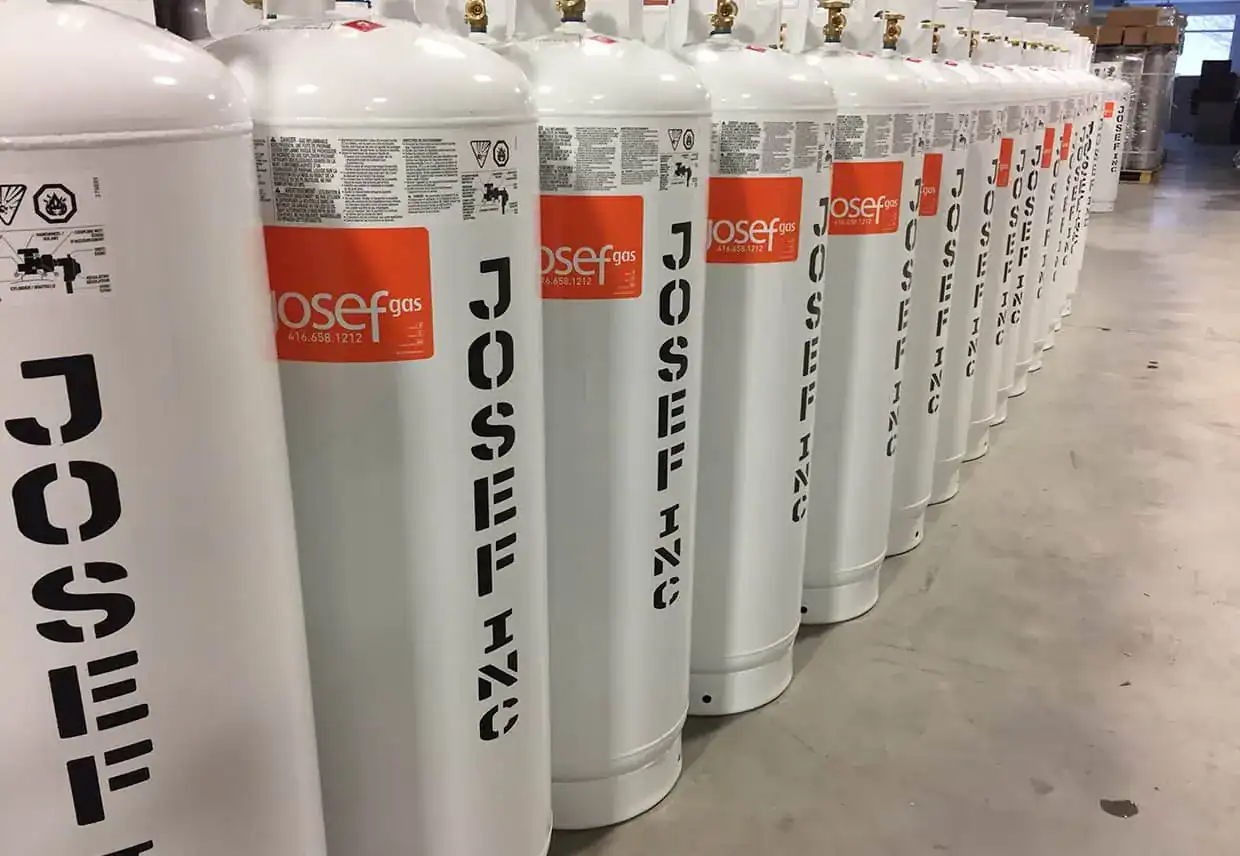
The real cost of a propane tank is not the fuel price; it is the cost of the labour it supports. In the GTA, a commercial roofing crew typically consists of five to eight members. If the site runs out of fuel at 10:00 AM and the replacement truck is two hours away, the contractor loses significant capital in idle wages.
Logistical Checklist
- Backup Supply: Always maintain a minimum of two full backup cylinders on the roof for every active torch.
- Standardized Fittings: Ensure all tanks use universal POL valves to prevent time-consuming hardware swaps during a cylinder change.
- Punctual Logistics: Partnering with a supplier that understands the “just-in-time” nature of construction ensures that the staging area is never empty.
Safety and Equipment Longevity
Running a tank until it is completely bone-dry can occasionally pull contaminants or heavy “oils” from the bottom of the cylinder into the torch hose. This leads to carbon buildup in the burner head, which reduces the efficiency of the flame and increases fuel consumption on the next job.
Maintenance Tips
- Nozzle Cleaning: Regularly clear the torch orifices to ensure a clean, blue flame which signifies efficient propane combustion.
- Regulator Checks: A faulty regulator can lead to excessive fuel flow, wasting money and potentially overheating the roofing membrane.
- Valve Protection: Keep the protective collars on the tanks during transport to prevent damage to the brass fittings, which can cause slow leaks.
Strategic Fuel Staging for High-Rise Projects
On high-rise commercial builds, moving fuel is a major logistical hurdle. Moving ten 100lb cylinders via crane requires a specific window of time and clear communication with the site supervisor.
Site Coordination
- Batch Hoisting: Crane time is expensive; hoist enough fuel for the entire week on Monday morning to avoid mid-week delays.
- Secure Storage: Use proper propane cages on the roof to comply with TSSA regulations and prevent tanks from shifting in high winds.
- Weight Management: Distribute the tanks across the structural beams of the roof to avoid exceeding the dead-load limits of the roof deck during construction.
Enhancing Profitability through Fuel Tracking
Contractors who track their fuel-to-square-metre ratio can bid on projects with much higher accuracy. By knowing exactly how long a 100lb cylinder lasts on a specific deck type, you can eliminate the “guesswork” that often eats into the profit margins of large-scale commercial tenders.
Data Points for Estimators
- Surface Type: Metal decks lose heat faster than wood or concrete, requiring more propane to maintain the membrane melt point.
- Insulation Thickness: Thicker insulation layers can act as a heat sink, occasionally requiring a slower, more fuel-intensive torching pace.
- Crew Experience: Skilled torchers use less gas by maintaining a rhythmic motion, whereas less experienced installers often “over-torch,” wasting fuel and risking damage to the membrane.
https://drive.google.com/file/d/1gVeVXnjvlRY6sBG_q5wkkR7ufiyaZnVx/view
(To graphics team: Kindly edit the caption to this – “Need a reliable partner to manage your supply of propane?” Retain the CTA at the right portion.)
Power Your Production with Reliable Gas
As you look for the most dependable industrial gas near you, our team provides the high-purity propane and punctual delivery needed to keep your torches firing. We offer the logistical support required to manage 100lb cylinder exchanges across the GTA, ensuring your crew stays productive from the first roll to the final flashing.
Reach out to Josef Gas to secure a delivery partner that treats your deadlines with the same urgency as your site foreman by calling (416) 658-1212 or emailing in**@********es.com.



