In stock
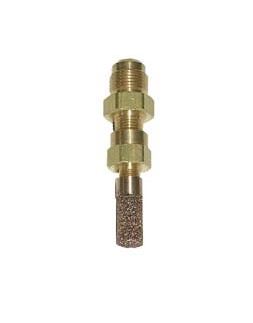
The Bronze Phase Separator with CGA-295 Fitting is a critical component engineered for the safe and efficient transfer of cryogenic liquids, specifically Liquid Nitrogen (LN2) and Liquid Argon. In cryogenic fluid dynamics, the transfer process often generates significant amounts of boil-off gas due to heat ingress into the transfer lines. This two-phase flow (gas and liquid) can result in turbulent, high-velocity discharge at the point of use. This device utilizes a high-porosity sintered bronze element to effectively separate the gas phase from the liquid phase. By allowing the vaporized gas to vent radially through the porous bronze structure, it decelerates the flow and ensures a steady, laminar stream of liquid is dispensed.
This assembly features a standard 1/8" FNPT (Female National Pipe Taper) thread on the separator body, making it highly versatile and compatible with a wide range of custom cryogenic piping and hose assemblies. The included CGA-295 adapter is manufactured to Compressed Gas Association standards, ensuring a secure, leak-proof connection to standard inert gas liquid cylinders and hoses. The CGA-295 connection is the industry standard for inert cryogenic liquids, preventing accidental cross-connection with incompatible gases like oxygen.
Beyond its primary function as a flow straightener and gas vent, the sintered bronze material acts as a particulate filter. This ensures that the dispensed liquid is free of ice crystals or other contaminants that could compromise sensitive downstream applications. Engineered for durability, this phase separator is capable of withstanding the extreme thermal cycling (from ambient temperature down to -196°C) inherent in cryogenic applications without cracking or degrading. Whether filling laboratory dewars, cooling semiconductor traps, or performing biological freezing, this tool provides the precise control and safety required for handling cryogenic fluids in professional environments.
| Additional Information |
|---|
| Packaging Description:1 per each |
| Item:Accessory |
| Material:Bronze |
| Connection Type:1/8" FNPT, CGA 295 |
| Gas Type:Liquid Argon, Liquid Nitrogen |
| Application:Cryogenic Transfer |
| Component Type:Phase Separator |