Package Price:
$62.46/3 per eachUsually ships within 3-5 business days
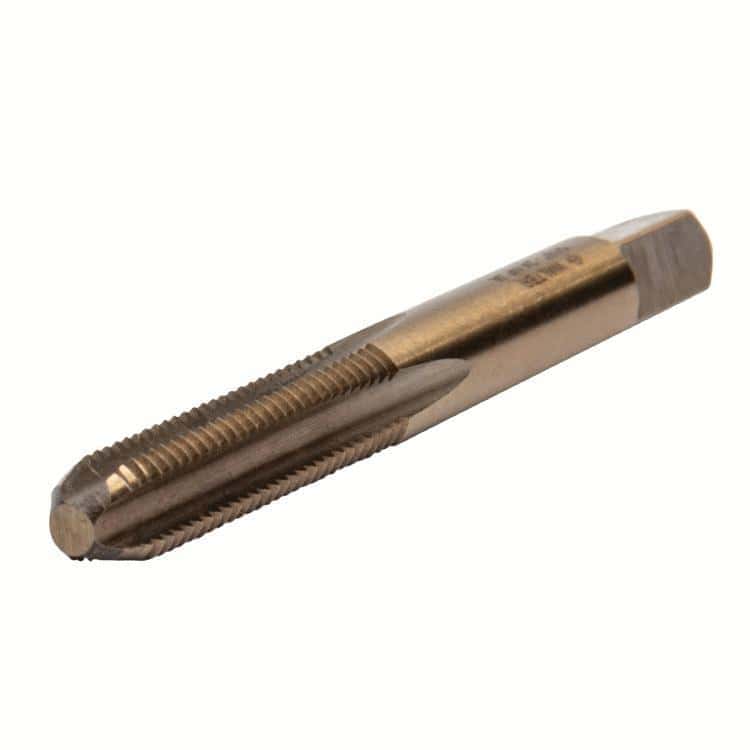
The Walter 03B056 is a premium-grade 5/16"-24 NF (National Fine) bottoming tap designed for professional machining and maintenance operations. Manufactured from high-quality High-Speed Steel (HSS), this tool is engineered to withstand the high temperatures and torque stresses associated with cutting threads in metals ranging from aluminum to stainless steel. Unlike standard carbon steel taps, Walter's HSS composition ensures superior edge retention and resistance to abrasion, making it a cost-effective choice for high-volume or critical threading tasks.
This specific model features a "bottoming" chamfer, characterized by a very short taper of only 1 to 2 threads at the tip. This geometry is critical for threading blind holes—holes that do not pass completely through the workpiece. By minimizing the non-cutting lead-in, the Walter 03B056 allows operators to cut full-depth threads virtually to the very bottom of the hole, maximizing fastener engagement and holding power. It is typically used as the final step in a tapping sequence, following a taper or plug tap, or used directly in rigid setups where thread depth is paramount.
Walter Surface Technologies is renowned for its commitment to precision. The threads on this tap are meticulously ground, not just rolled, ensuring tight tolerances and a smooth surface finish on the internal threads it produces. This precision reduces friction during the tapping process and helps prevent binding, a common cause of tap breakage. Whether used for creating new threads in a fabrication project or repairing damaged threads in maintenance repair and overhaul (MRO) environments, this tool delivers consistent, reliable performance.
To ensure optimal performance and extend the life of the tool, it is highly recommended to use this tap in conjunction with a suitable cutting fluid or lubricant, such as Walter's Coolcut or Alucut, depending on the base material. The 03B056 represents the intersection of durability and precision, making it an essential component of any professional machinist's or millwright's toolkit.
| Additional Information |
|---|
| Packaging Description:3 per each |
| Brand:Walter |
| Item:Tap |
| Size (in):5/16" |
| Thread Size:5/16"-24 NF |
| Tap Style:Bottoming |
| Material:High-Speed Steel (HSS) |
| Thread Standard:NF (National Fine) |
| Application:Blind Holes, Thread Repair |