Package Price:
$48.84/3 per eachUsually ships within 3-5 business days
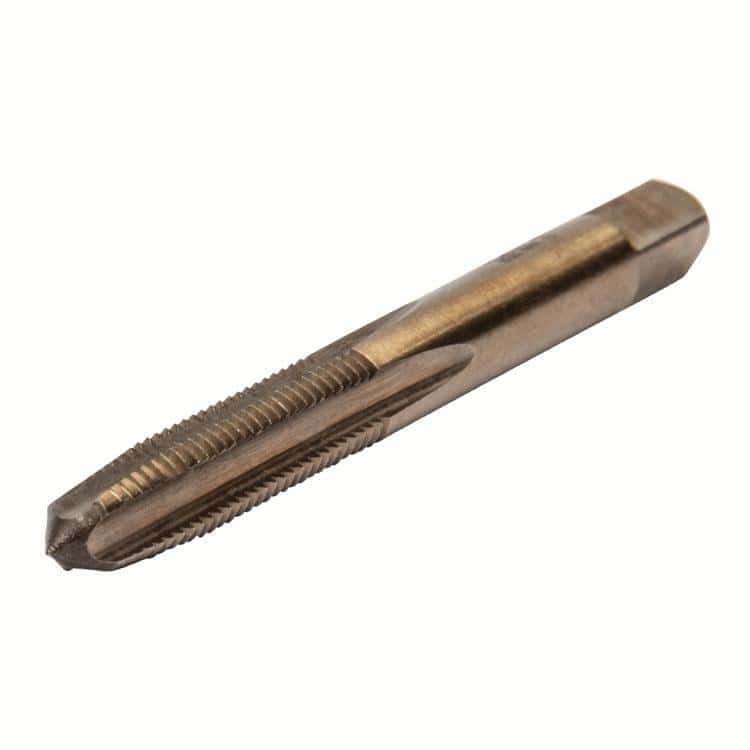
The Walter 1/4-28 NF Taper HSS Tap (SKU: 03B044) represents the pinnacle of threading tool technology, designed for professionals who demand accuracy and longevity. Manufactured from premium High Speed Steel (HSS), this tool is engineered to withstand the high thermal and mechanical stresses associated with cutting threads in industrial metals. Unlike carbon steel alternatives, HSS retains its hardness at higher temperatures, allowing for faster cutting speeds and a significantly extended service life. The tap undergoes a rigorous hardening and tempering process, ensuring the structural integrity required to cut through tough alloys without chipping or dulling prematurely.
One of the standout features of this Walter tap is its precision ground threads. Grinding the threads into the hardened blank, rather than cutting them before heat treatment, eliminates the risk of distortion and ensures a perfect thread profile. This results in tighter tolerances and a smoother finish on the internal threads of your workpiece. The "Taper" style features a chamfer of approximately 7 to 10 threads, which distributes the cutting load gradually. This design makes it the ideal choice for starting new threads, as the tapered end helps align the tap with the hole, reducing the chance of cross-threading. It is particularly effective for through-holes where the chips can be pushed ahead of the tool.
Versatility is key in industrial environments, and the 03B044 excels across a wide range of materials. Whether you are working with soft aluminum, standard mild steel, or work-hardening stainless steel, this tap delivers consistent performance. The 1/4-28 NF (National Fine) thread configuration provides a finer pitch than standard coarse threads, offering greater tensile strength and better resistance to vibration loosening. This makes it an excellent choice for automotive, aerospace, and precision machinery applications where secure fastening is critical. By choosing Walter, you are investing in a tool that reduces downtime and improves the quality of your mechanical assemblies.
| Additional Information |
|---|
| Packaging Description:1 per each, 3 per each |
| Brand:Walter |
| Thread Size:1/4"-28 NF |
| Material:High Speed Steel (HSS) |
| Tap Style:Taper |
| Thread Standard:NF (National Fine) |
| Recommended Drill Bit:#3 (0.2130") |